Where Does the Love Go?
When grief has nowhere to go, God has already prepared a table.
SOJOURNER
Wandering Armenian
3/17/20264 min read
Where Does the Love Go?
“Pour out your heart before him; God is a refuge for us.”
Psalm 62:8 (ESV)
Jonathan had found the passage in a dog-eared paperback somewhere between Cox’s Bazar and Colombo, tucked into the seat pocket of a half-empty prop plane. He couldn’t remember the author. He couldn’t remember the flight. But the words had lodged themselves in the marrow of him and refused to leave.
“No one tells you where to put the love when a person is no longer here to receive it. It doesn’t disappear. It sits in your chest -heavy, unused, turning into ache.”
He had read that sentence approximately forty-seven times since. He knew because he had begun counting the way you count when the mind needs something small and measurable to hold onto.
“Some nights it spills out of your eyes. Other nights it just keeps you awake.”
This particular Tuesday, it was keeping him awake. He was up before five, the kitchen still dark, and he moved through it the way he had learned to move through most rooms lately -carefully, deliberately, as though the air itself were holding its breath.
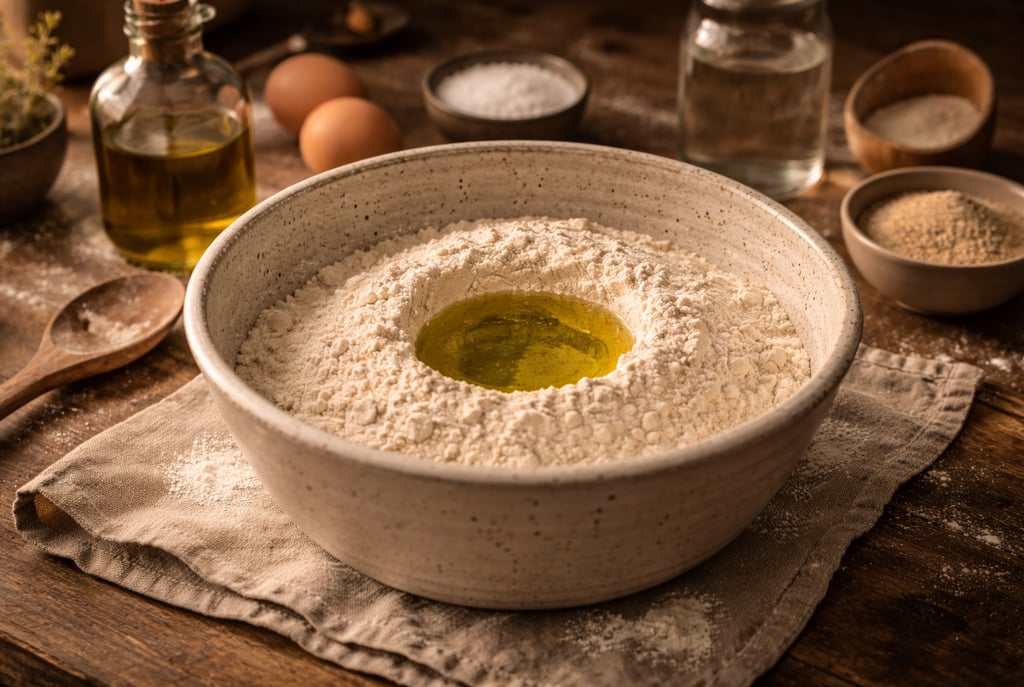
The flour first. He had learned that. Always the flour first, measured and sifted into the wide ceramic bowl that had been his mother’s, cream-colored with a thin blue rim worn almost to nothing at the lip. Then the salt. Then the cool water, added slowly-not poured, never poured, but coaxed. He was making bread. Simple bread. The kind that asked nothing of him except his hands and his attention, which was really all he had to give these days.
Jonathan had spent seventeen years giving those hands to the work -to camps, clinics, schools and convoy routes, to the long governance of logistics that kept food moving toward hunger. He knew how to be useful. He had built his entire self around usefulness. And then one Tuesday much like this one-though nothing like this one, the work had ended. Not dramatically. Just a letter. A budget line. A polite phone call.
And then the silence.
He had all this love -for the work, for the people, for the version of himself who had known what to do next and nowhere left to put it.
He pressed his knuckles into the dough. It pushed back elastic and alive, warmer now than when he’d started. This was what he came to the kitchen for in the early hours. Not the bread, exactly. The conversation. The fact that something would respond.
His mind moved, as it often did now, to the faces. The boy at the water distribution point in Nia Kavala camp in Greece, who had insisted on shaking his hand with great ceremony before accepting a cup. The old woman outside Teknaf in Cox’s Baza, who had pressed a hard-boiled egg into his palm one morning and walked away without explanation. The colleague Priya who had laughed so loudly at his terrible Bangla that she’d had to sit down. He loved these people. He still loved them, even now, even here, even with flour on his forearms and a grey morning gathering at the window. The love had not moved. It was simply undeliverable. No address. No route.
He folded the dough and turned it, folded and turned, and somewhere in that rhythm he heard, or remembered, or maybe simply finally received, the words he had read a hundred times without absorbing:
“Pour out your heart before him; God is a refuge for us.”
Psalm 62:8
Pour it out. Not manage it, not redirect it, not find a worthy channel for it. Pour it out before Him. Like water. Like grief. Like love with nowhere left to go.
Jonathan set the dough to rest beneath a clean cloth. He pulled a stool to the counter and sat down, and for a long time he did nothing at all except let himself feel the full weight of everything still living in his chest.
He thought of the faces. He let himself love them without apology. He thought of the work not its ending, but its substance, the years of it, the meaning of it. He let himself grieve it without flinching. And then, in a way he could not fully articulate, he poured it. All of it. Into the waiting, the quiet, the presence that he had spent most of his adult life moving too fast to sit still before.
He did not feel emptied. He felt, strangely, held.
When the bread came out of the oven two hours later, brown and faintly crackling at the crust, he sliced it and sat at the kitchen table in the full morning light. He ate slowly. He did not eat alone.
A Moment to Reflect
There is no love that God asks us to suppress, only love He invites us to bring. Every undeliverable feeling, every ache that sits wordless in the chest-Scripture does not call these burdens to be managed. It calls them to be poured.
You are not too much. Your grief is not too heavy. Your love is not wasted simply because the one it was for is no longer reachable. God is a refuge and a refuge, by definition, holds what is too large to be carried alone.
What are you carrying today that has nowhere left to go?
A Prayer
Lord, I have love that has run out of places to land. I have grief with no clean edges. I have ache I do not know what to do with. You said to pour it out — so here it is. All of it. Receive what I cannot carry. Be the refuge the Psalm promised. Let me eat my bread and know I am not alone. Amen.