When Disappointment Becomes a Doorway
Between what was and what's next, we often find God's richest lessons. For those navigating uncertainty, here's hope from an unexpected biblical garden.
DAILY REFLECTIONS
Wandering Armenian
1/11/20263 min read

When Disappointment Becomes a Doorway
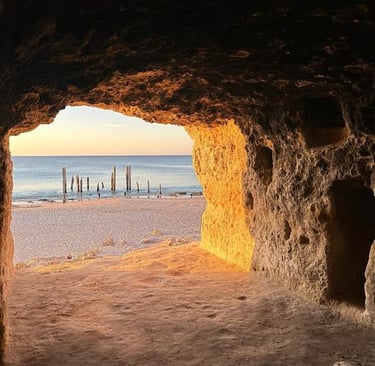
Jonathan stood in his small kitchen, flour dusting his hands like the salt spray that drifted through his window from the Pacific. Another email sat unanswered on his laptop—another opportunity that didn't feel quite right, another door that seemed to close before he could even decide whether to walk through it.
Aid work had been his calling, or so he'd thought. Years of serving others, of purpose that burned bright and clear. Now, back in this distant land, he found himself between worlds: the one he'd left behind and one he couldn't yet see. Some days he kneaded dough, losing himself in the rhythm of creation. Other days he wrote, trying to shape meaning from the shapelessness of transition.
The regret emails—that's what he called them privately. Messages about positions filled, opportunities passed, paths not taken. Each one felt like a small drowning, a confirmation that he'd somehow missed his moment.
But this morning, as golden light streamed through his window and his bread rose on the counter, a verse surfaced in his memory: "Unless a grain of wheat falls into the earth and dies, it remains alone; but if it dies, it bears much fruit" (John 12:24).
Jesus spoke these words knowing His own death approached. But He wasn't just talking about crucifixion—He was describing the pattern of all true growth, all genuine transformation. The seed must surrender what it is to become what it's meant to be. It must break open in the darkness, must let go of its old form entirely.
Jonathan realized he'd been viewing his disappointments as endings, as failures, as drownings. But what if they were burials? What if this season of loss and uncertainty wasn't death but planting?
The aid worker he'd been—capable, certain, driven—that seed was in the ground. And yes, it felt like dying. The old identity was breaking apart beneath the surface where no one could see. But breaking apart is what seeds do before they grow.
He thought about his baking, how he'd initially dismissed it as mere distraction. Yet people in his neighborhood now waited for his sourdough, gathered at his table, shared their own stories of transition over warm slices spread with butter. He thought about his writing, how words were beginning to flow that he couldn't have written when he was too busy saving the world to examine his own heart.
For Reflection:
In seasons of disappointment and uncertainty, we're invited to trust the wisdom of the seed. What feels like an ending may be the exact burial necessary for new life to emerge. The question isn't whether disappointment will come—it will. The question is whether we'll let it plant us or convince us we're finished.
Where in your life do you feel buried? What if that's precisely where you're positioned to grow? The seed doesn't need to understand the soil to surrender to it. It simply trusts the process that turns death into multiplication, loss into harvest, disappointment into the doorway of something more fruitful than it could have imagined while it remained alone.
Prayer: Lord, help me trust the burial. When disappointment breaks me open, let it be the breaking that leads to growth. Where I see endings, show me plantings. Where I feel lost, remind me I'm positioned. Transform my regrets into rich soil for whatever You're growing next. Amen.
Perhaps disappointment was doing exactly what the saying promised—not drowning him but shaping him. Reshaping him. The emails that haunted him, the doors that closed—maybe they weren't rejections but redirections. Maybe God was protecting him from paths that would have kept him as he was, preventing the breaking open that leads to fruitfulness.
"It remains alone," Jesus said of the unplanted seed. Alone but intact, perfect but purposeless, safe but sterile.
Jonathan looked at his bread, now doubled in size, ready for the oven. He hadn't seen it grow—that happened in the waiting, in the dark warmth of rising. His own growth was happening the same way, beneath the surface of his awareness, in the very waiting that felt like waste.
He opened his laptop and began to write, not a response to the regret emails, but a letter to himself and to others like him—the in-between people, the not-yet people, the buried-seed people who wonder if they're dying when they're actually just beginning.