The Wayfarer's Harvest: Five Fruits, Five Lessons
A former aid worker discovers sacred truths hidden in the fruits that sustained him across distant lands and broken worlds.
BACK IN THE DAY
Wandering Armenian
2/27/20269 min read
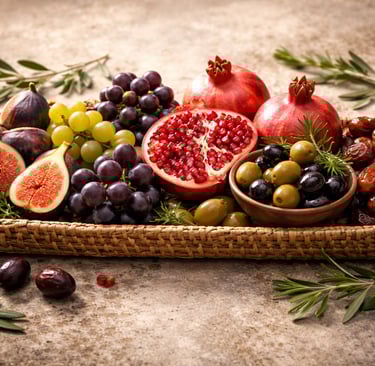
The Wayfarer's Harvest: Five Fruits, Five Lessons
Jonathan stood in his small kitchen, flour dusting his forearms like snow, and wondered how he'd arrived here. Not geographically, that path was clear enough: Aleppo to Kabul to Baghdad to Tbilisi, then home. But spiritually, internally that journey was written in a language he was only beginning to read.
The language of fruit.
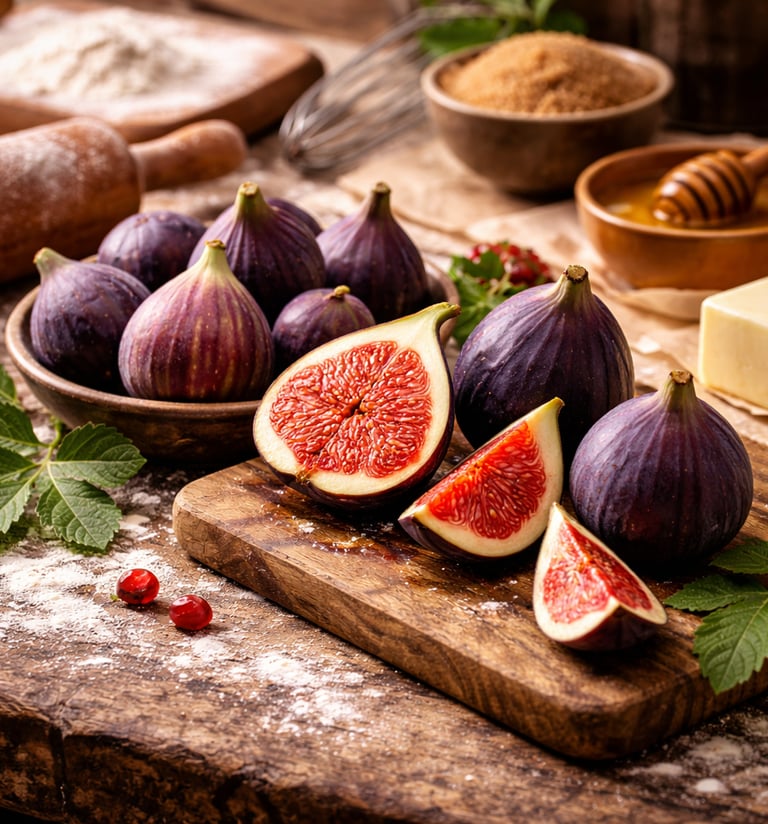
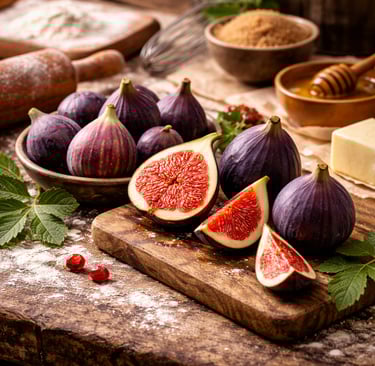
It started in a village outside Aleppo, before the world there crumbled into dust and blood. An elderly woman, her hands gnarled like olive wood, had pressed three fresh figs into his palm. She said nothing at first, just held his hands closed around the fruit, her eyes carrying centuries of knowing. Then, in Arabic: "For your journey."
He bit into one that evening, sitting on a cracked concrete wall while the sunset turned the ruins golden. The sweetness exploded-seeds crunching between his teeth, honey dripping down his wrist, staining his Aid worker badge. It was nothing like the dried discs he'd known from grocery stores back home. This was alive. This was what Eden must have tasted like.
Years later, kneading dough in his small kitchen while the world continued its mad spin without him, he remembered Jesus cursing the barren fig tree in Mark 11:12-14. Not out of spite, but out of sorrow. A fig tree in full leaf should bear fruit. Should. That word haunted him now.
"I had full leaf," Jonathan whispered to his sourdough starter, its surface bubbling with patient life. The aid work, the credentials, the travelled miles, the meetings with donors and officials’ all full leaf. Impressive from a distance. But where was the fruit? Where were the transformed lives, the lasting change? Where was the sweetness that others could taste?
The fig taught him this: God hungers not for our appearance of productivity, but for actual fruit. The sweetness comes from inside out, from roots deep in living water, from branches that don't just reach for the sun but transform its light into something others can taste and be nourished by. A fig's seeds are on the inside, hundreds of them, crunching with potential. You can't fake that. You can't manufacture it in a quarterly report.
But figs were only the beginning.
Grapes- the Vine
The vineyard in Georgia-the country, not the state, stretched across hillsides like a prayer shawl, green and ancient and utterly indifferent to his exhaustion. Jonathan had arrived eighteen months into deployment, his faith threadbare, wondering if his work meant anything at all. The refugee crisis was a flood with no ark. The funding dried up faster than hope. His team was fracturing under the weight of impossible need.
The vintner, a man named Giorgi with a face like weathered granite, found him sitting alone in the workers' cottage. "Come," he said simply, and Jonathan followed because he had no better ideas.
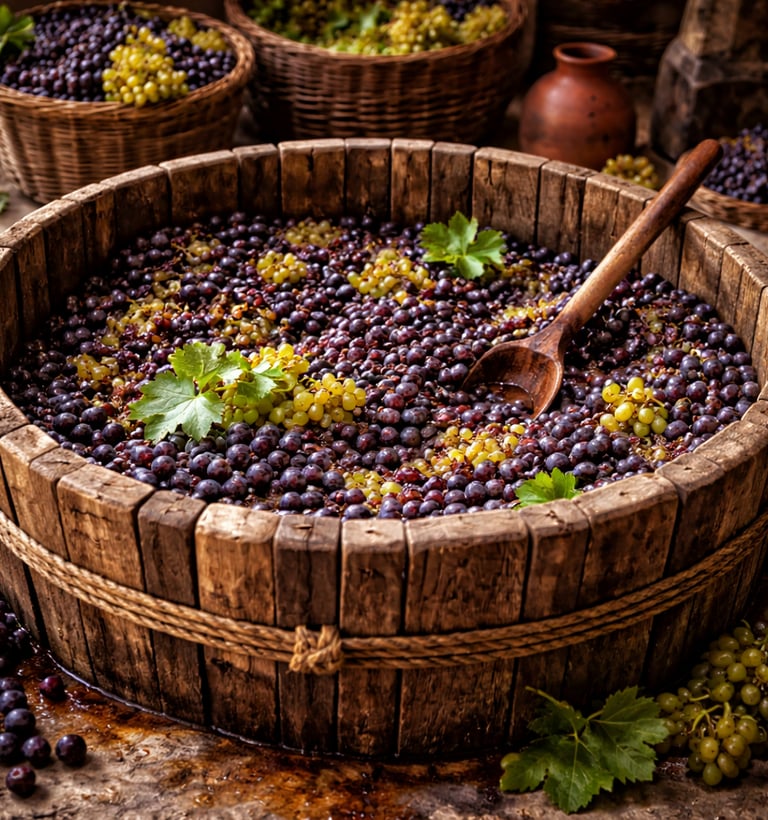
Giorgi led him to the crushing floor the Satsnakheli, a wooden vat filled with freshly harvested grapes. Traditional method, he explained in broken English. Feet, not machines. "Come," he said again, pulling off his boots.
Jonathan hesitated, then climbed in.
The sensation was strange and primal-grapes bursting beneath his weight, juice flowing between his toes, the sweet smell rising like incense from a priest's censer. His feet were stained purple. His soul felt seen. Giorgi laughed at Jonathan's expression, a sound like distant thunder. "You think wine comes easy? No. No, no. Crushing makes wine. Crushing makes everything good."
That night, reading by kerosene light, Jonathan found Jesus's words in John 15:5: "I am the vine; you are the branches. If you remain in me and I in you, you will bear much fruit; apart from me you can do nothing." But it was John 12:24 that broke him open like those grapes beneath his feet: "Unless a kernel of wheat falls to the ground and dies, it remains only a single seed. But if it dies, it produces many seeds."
The crushing he'd felt-the failed projects, the donors who pulled funding for "more strategic initiatives," the people he couldn't save no matter how hard he tried wasn't the end of the story. It was the process. Wine doesn't apologize for being made through crushing. It becomes something that brings joy, that celebrates weddings, that Jesus himself chose to represent his blood at the last meal with his friends.
His hands, kneading dough now in his kitchen, remembered the sensation of grapes giving way. Each loaf was a small death of self, a crushing of grain into something that could feed more than just himself. The pressure he'd felt wasn't punishment. It was transformation. God was making wine, and wine requires the press.
Pomegranates- full of seeds but full of freshness
In Afghanistan, between the crushing and the pressing, between the deployment that broke him and the one that would teach him patience, Jonathan met a farmer with a pomegranate orchard.
The trees looked almost hostile-thorny, twisted, offering no shade in a land that desperately needed it. They seemed to embody the country itself: defensive, wounded, refusing comfort. "Not beautiful trees," the farmer admitted in Dari, his English translator stumbling over the poetry. "But wait."
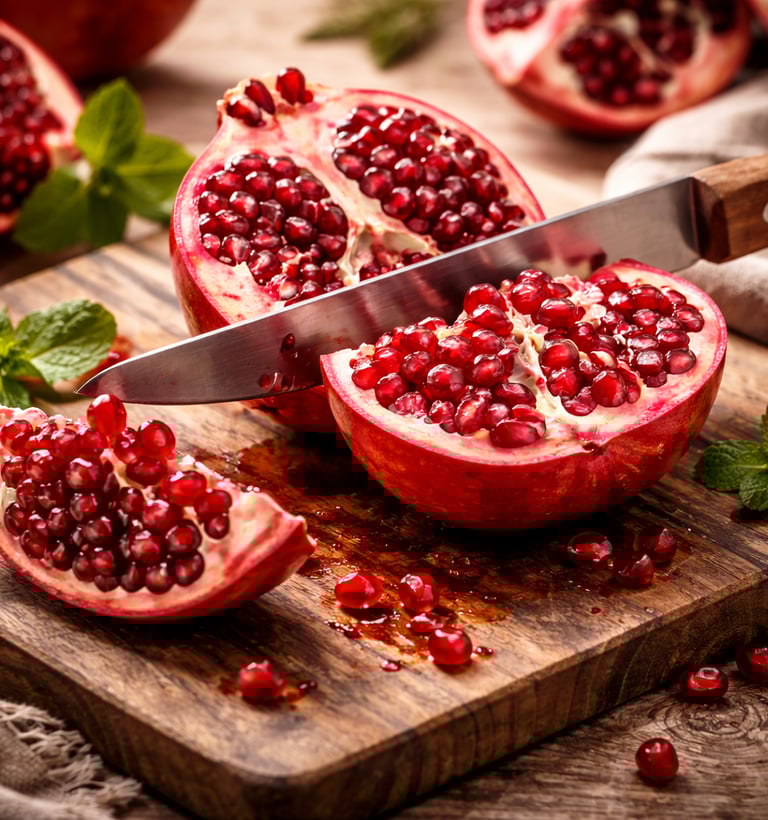
He selected a fruit carefully, felt its weight, then split it open with his knife.
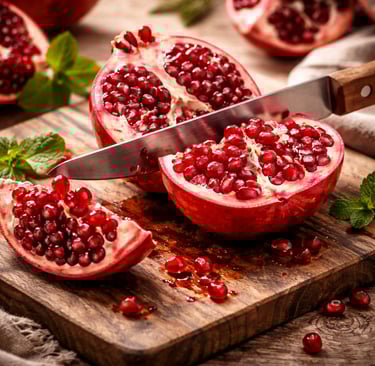
Jonathan gasped. Inside the tough, bitter rind: jewels. Hundreds of arils, each wrapped in translucent ruby flesh, each containing juice and sweetness and life. The complexity was staggering-sweet and tart simultaneously, crunching and bursting, each seed its own small world.
"This is Afghanistan," the farmer said quietly, no longer smiling. "Everyone sees the hard outside. Only those who break through find the treasure. But breaking through" he gestured at the juice staining both their hands, "breaking through is messy work."
The pomegranate became Jonathan's meditation on Psalm 139:14—"I praise you because I am fearfully and wonderfully made; your works are wonderful; I know that full well." But also, on how we see each other. The hardened refugee with defensive eyes. The suspicious local who wouldn't meet his gaze. The difficult teammate who criticized every decision. Each one a pomegranate complex, abundant, full of hidden seeds that would spill everywhere if you did the hard work of truly breaking through.
The Jewish high priest wore pomegranates embroidered on his robe in Exodus 28:33-34. Not crowns or eagles or symbols of power pomegranates. A fruit that demands you work for its sweetness, that rewards patience with abundance, that scatters seed everywhere when opened. A fruit that says: what matters is hidden, complex, and worth the effort.
Back in his kitchen, Jonathan learned to crack pomegranates underwater a trick a Syrian friend taught him over tea and tears watching the arils float like rubies while the bitter white pith sank away. How many people had he judged by their rind? How many seeds of potential had he missed because he wouldn't do the messy work of truly seeing?
The pomegranate taught him that abundance is often hidden behind difficulty. And that some treasures require you to stain your hands.
Dates- looks insignificant
But it was the date palm in Iraq that taught him about time.
The tree stood alone in a bombed-out courtyard, incongruously alive amid the rubble. Sixty years old, the sheikh told him, his voice carrying the weight of what they'd both seen. "My grandfather planted it," he said, running his hand along the trunk's rough skin. "He never ate from it. My father barely did. But I eat. My children eat. Their children will eat."
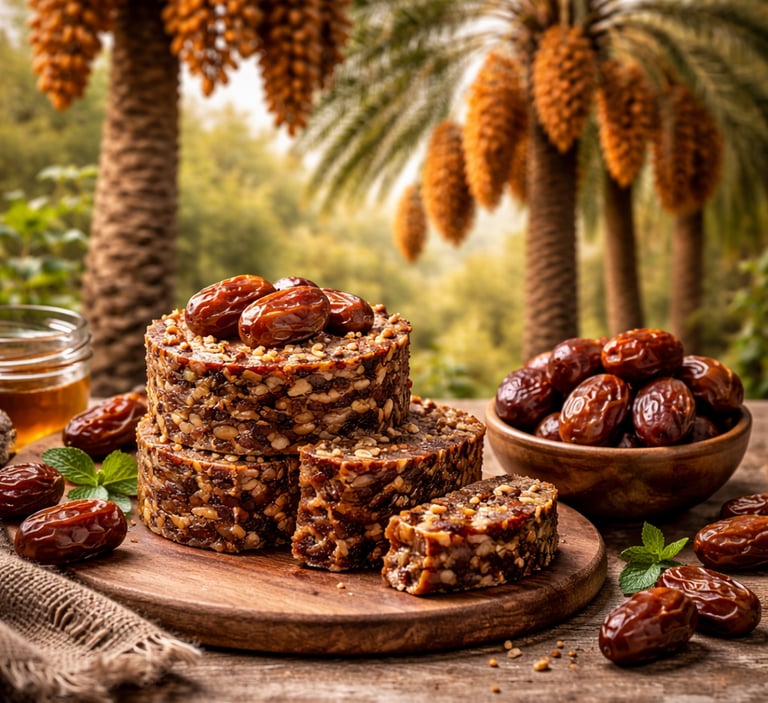
Jonathan learned that date palms take seven to ten years before they fruit. Sometimes longer. They need scorching heat that would kill lesser trees, roots that go deep where no one sees, and patience that outlives the planter. The sheikh's grandfather had died in the shade of a tree that gave him nothing but shade. And somehow, that was enough.
Psalm 92:12-14 suddenly made sense in a way it never had in climate-controlled churches: "The righteous will flourish like a palm tree, they will grow like a cedar of Lebanon; planted in the house of the Lord, they will flourish in the courts of our God. They will still bear fruit in old age, they will stay fresh and green, proclaiming, 'The Lord is upright; he is my Rock.'"
The palm doesn't rush. It doesn't panic when the first year brings no fruit, or the fifth, or the eighth. It sends roots down deep where no one sees, down to water sources that sustain through drought and bombing and regime change. And when it finally fruits, it fruits abundantly one tree producing up to 300 pounds of dates a year for decades, maybe a century if the wars leave it alone.
This was the opposite of aid work's obsession with quick wins, quarterly reports, measurable impacts that could be photographed and posted and fundraised upon. This was kingdom work. Plant now, fruit later. Maybe much later. Maybe for someone else's grandchildren.
The sheikh offered Jonathan dates from his grandfather's tree. They were impossibly sweet, with a complexity that supermarket dates could never achieve. "Patience makes sweetness," the sheikh said. "Rushing makes nothing."
Jonathan's bread-making became an act of palm-tree faith. The starter he fed daily, never seeing immediate results. The long fermentation that couldn't be hurried. The slow rise that required waiting while the world screamed for speed. None of it rushed. And people came back, week after week, because things made with patience taste different. They nourish differently. They last.
He would not see all the fruit. Neither did the sheikh's grandfather. But someone would eat from trees he planted in kitchens and conversations and small acts of faithful crushing.
Olives: The final fruit, the olive, waited for him in Palestine
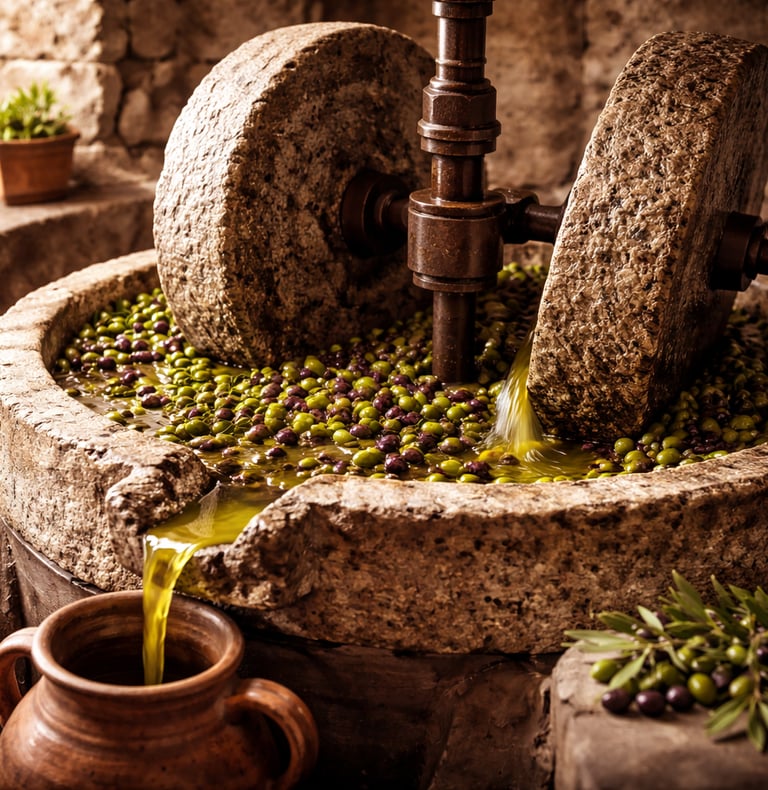
The olive press was ancient-stone, heavy, relentless as history itself. Jonathan watched as fresh olives went in, beautiful, plump, green with youth and potential. What came out was neither beautiful nor whole. It was oil.
"First press is cold," the presser explained, his arms slick with the fruit of his labour. "Gentle. Extra virgin. Best quality. After that, we add heat, pressure. Different quality, but still oil. Still useful. Nothing is wasted."
Someone mentioned that Gethsemane means "oil press." Jonathan felt the words like a hand on his chest. Jesus prayed there before his crushing in Matthew 26:36-46. He sweat drops of blood their oil of a different kind, pressed out under the weight of what was coming. The garden where God himself was pressed.
The olive taught Jonathan that some things only come through the press. Anointing oil for priests in Exodus 30. Light for the tabernacle in Leviticus 24. Healing for wounds in Luke 10. All pressed out. All requiring the crushing of something whole and beautiful into something more useful than beauty.
He thought of his own pressing the disillusionment with aid work, the world's indifference to suffering, the lawmakers' cruelty dressed up as policy, even the believers who looked away because it was easier than seeing. He'd felt crushed under the weight of it. But perhaps he was being pressed. Perhaps God was making oil.
In Romans 8:28, Paul wrote that "in all things God works for the good of those who love him, who have been called according to his purpose." Not that all things are good—Paul wasn't naive and neither was Jonathan. But that God works in all things. Even the press. Especially the press. Even when you're in Gethsemane and the weight is so heavy you sweat blood.
Jonathan's kitchen filled with the smell of rosemary olive oil bread. Each loaf required kneading pressure, folding, pressing the dough against itself until the gluten developed into something that could hold air and rise. Each loaf emerged transformed, golden, ready to be broken and shared.
The olive doesn't resist the press. It can't, really. But in surrendering to it, it becomes something that brings light to darkness, healing to wounds, anointing to the called. Three things the world desperately needed. Three things that only come through crushing.
Epilogue: The Harvest
Jonathan's kitchen wasn't much. No deployments, no title, no quarterly reports proving impact. Just flour and water and salt and time.
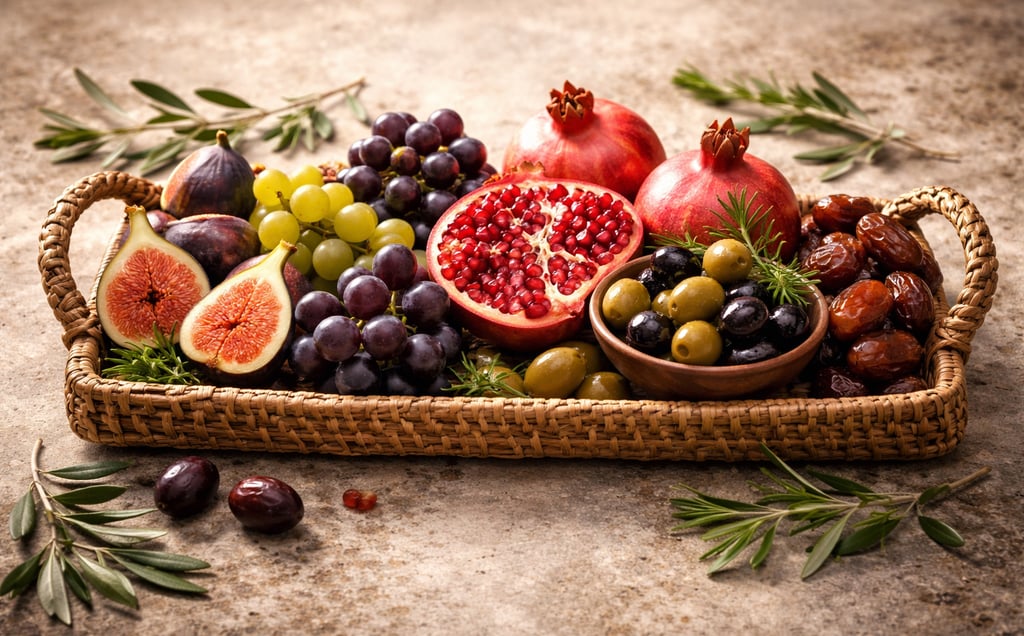
But on his counter sat five small bowls: dried figs, raisins, pomegranate seeds, dates, and olives. Five fruits from five journeys. Five teachers from five pressings.
A knock at the door. A neighbor. "I smelled bread."
Jonathan smiled, pulling a loaf from the oven studded with figs and walnuts, brushed with olive oil. "Come in," he said. "I'll put the kettle on."
Because this is what fruit does. It doesn't shout about its fruitfulness. It doesn't measure its impact. It simply offers itself, sweetness pressed from crushing, abundance hidden in hard rinds, patience rewarded in shade for future generations.
The world was still crumbling, still self-centered, still led by crazy lawmakers. But in this kitchen, five fruits taught their lessons on repeat. And slowly, quietly, one loaf at a time, Jonathan the Wayfarer learned to bear fruit that would last (John 15:16).
Not because the world deserved it. But because he'd been pressed, crushed, planted, and tended by hands that knew exactly what they were doing.
And the harvest, though hidden, was more abundant than he could ask or imagine.
[This story was penned by me in the second week of February 2026 after I re-read one of my old journals form back in the day.]