The Storm and the Shepherd
Trapped in a mountain storm, survival depends on trusting a stranger who represents the Good Shepherd's care.
WHERE FAITH MEETS THE ROAD
Wandering Armenian
2/7/20262 min read


The Storm and the Shepherd
Paktika Province, 2005
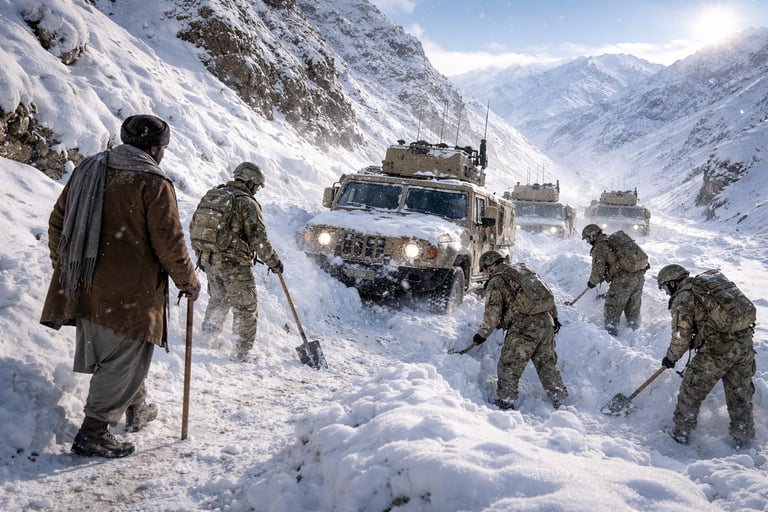
The blizzard descended without any warning as our three-vehicle convoy crossed the treacherous mountain pass, the road little more than a rocky track carved into the mountainside. Visibility dropped from miles to mere feet within minutes. Radio communication failed completely as the mountains blocked our signals. Within half an hour, we were hopelessly, dangerously lost, vehicles stuck fast in rapidly deepening drifts, temperature plummeting toward deadly levels as the thin mountain air grew colder.
Then, like an apparition materializing from the swirling white chaos, a figure emerged, a lean shepherd wrapped in a thick wool “patou shawl”, his weathered face barely visible, leading us urgently with his carved wooden staff. He gestured frantically toward what looked like solid mountain wall, and something in his manner, his intensity, commanded immediate trust. We made the split-second decision to follow on foot, abandoning our vehicles to the storm's mercy, as he led us through the blinding snow.
He guided us through what turned out to be a narrow defile we'd never have found ourselves, then to a sturdy stone shelter built into the mountainside. Inside, his extended family- his wife Amina Jan, elderly mother Waghma, four children, and his brother's widow Shameem shared their cramped space without hesitation. His wife immediately began preparing food, and they shared what they had- ‘mantu’ dumplings filled with spiced ground meat and minced onions, served steaming hot with thick yogurt sauce and a hearty lentil dish. The shepherd's wife poured endless cups of ‘kehwa’, green tea fragrant with cardamom, cinnamon, and cloves, while their children stared at us with enormous, curious eyes but asked no questions.
For two long days, the storm raged with terrifying fury outside those stone walls. We slept on their floor, ate their precious food stores, burned their carefully collected wood. They gave everything without hesitation, without once expecting payment or even thanks. When I tried repeatedly to offer money, pressing bills into the shepherd's calloused hand, he refused with gentle but firm dignity.
"God sent you to my door in your time of need," he said through gestures, broken Pashto, and our limited translator app. "You are now my responsibility, my guests. To accept payment would dishonor both of us and deny God's purpose."
On the third morning, the storm finally broke, revealing a world transformed into sparkling white. He guided us carefully back to our buried vehicles, helped us dig them out with his family, checked that our engines would start, then disappeared back into the high mountains with his flock, refusing even our emergency rations.
Later, back at base, I learned that particular route was notorious for avalanches and exposure deaths. Dozens of travelers had perished there over the years. But somehow, at the exact moment we desperately needed rescue, a shepherd appeared from nowhere. Coincidence? Statistical probability? I knew in my soul it was neither. And all that Derik Gyant, my soldier friend could remember that verse he had read that morning of his travel that read as, "He tends his flock like a shepherd: He gathers the lambs in his arms and carries them close to his heart."[Isaiah 40:11]