The Garden in the Ruins
Among destruction, a single act of creation reveals the Master's plan for renewal and hope.
WHERE FAITH MEETS THE ROAD
Wandering Armenian
2/2/20262 min read
The Garden in the Ruins
Kabul, 2013
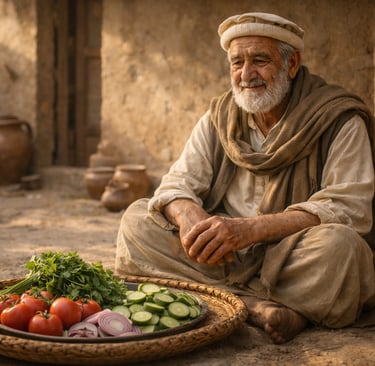
The compound had been bombed three times in as many months. Craters pocked the courtyard like open wounds in the earth, and twisted rebar jutted from shattered concrete walls like broken bones piercing skin. Scorch marks blackened the walls where rockets had impacted. Yet every single morning, rain or shine, old Hajji Ibrahim appeared with his ancient wooden bucket, faithfully tending a small plot he'd cleared with his bare hands in the corner of the devastated courtyard.
"What are you planting, Hajji?" I asked through our translator one morning, genuinely curious about his stubborn persistence.
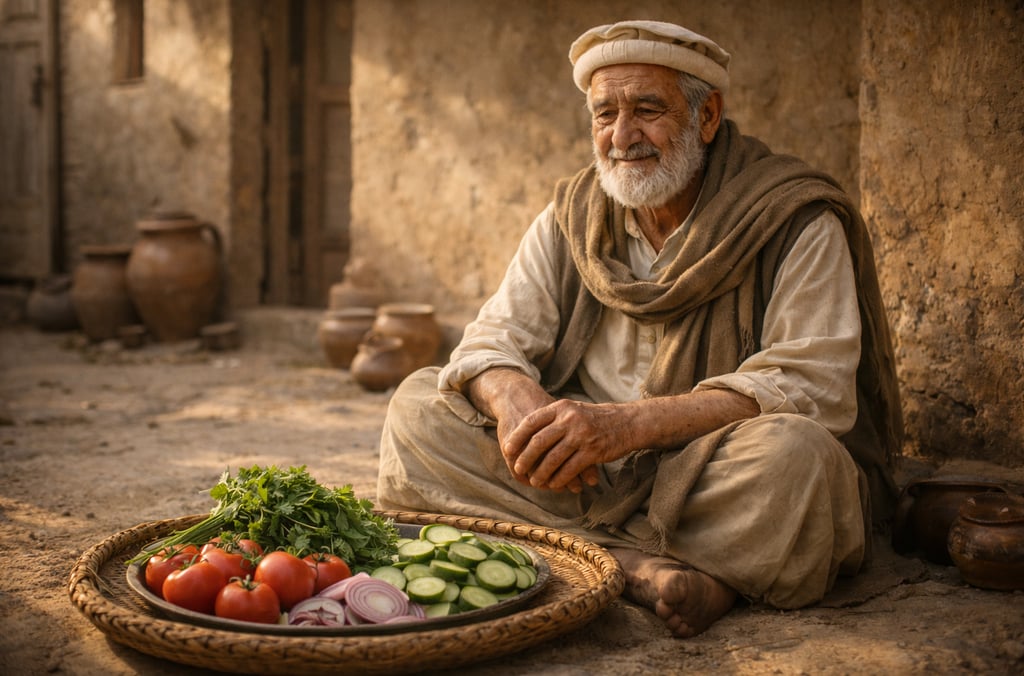
"Tomatoes, cucumbers, mint for fresh chutney," he replied, his weathered hands patting the soil with surprising gentleness. "And flowers- zinnias, like my grandmother grew in her garden in Herat, before the wars came. She taught me that beauty feeds the soul when bread feeds only the body."
I watched him work for weeks, honestly thinking it futile. The earth seemed utterly dead, poisoned by explosives and soaked with diesel fuel. The security situation grew more hopeless daily. But Hajji Ibrahim came faithfully, sometimes ducking under fire, sometimes working in the pre-dawn darkness, always patient, always tending his impossible dream.
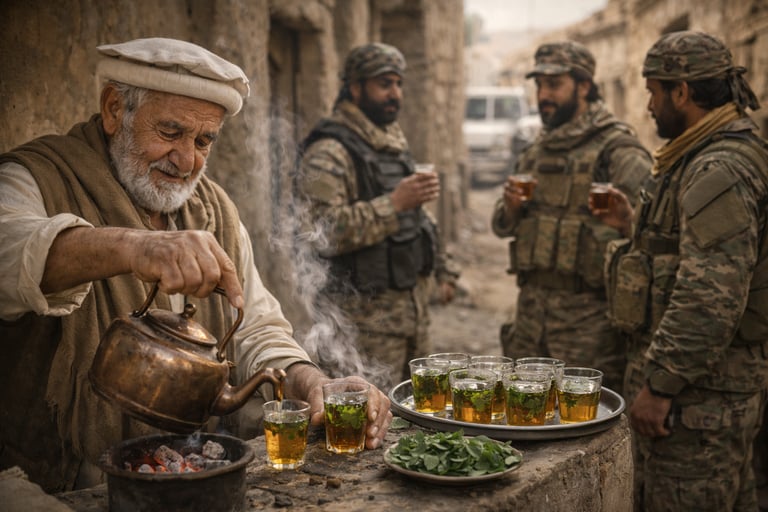
Three months later, impossibly, green shoots appeared. Then delicate blossoms. The compound's children who had known only war and destruction their entire short lives gathered around the garden with pure wonder brightening their faces. Hajji Ibrahim made fresh Salata with his precious tomatoes and cucumbers, dressed simply with lemon juice and olive oil, and shared it generously with everyone, be it Afghan staff, American soldiers, even the suspicious guards. The mint became fragrant tea that soldiers and locals drank together, a small bridge across vast cultural chasms.
One evening, as sunset painted the distant Hindu Kush mountains crimson and gold, Hajji Ibrahim caught me staring at his thriving garden with something like awe. "You thought I was crazy at first, planting here in this destroyed place, didn't you?"
"I did," I admitted honestly, somewhat embarrassed. "I thought you were wasting your time."
He smiled, deep lines crinkling around his eyes. "Young man, God plants hope in destroyed places. He grows gardens in our broken hearts when we think nothing can ever bloom again. I am just His gardener, doing the work He calls me to do. Whether the harvest comes or not, my job is only to plant and tend with faithfulness."
In that profound moment, watching the evening light gild his garden, I realized faith isn't about believing life will be easy or that our efforts will always succeed it's about planting seeds in bombed-out courtyards anyway, trusting absolutely that the Master of all creation can bring forth life from death, beauty from ashes.
"He makes me lie down in green pastures, he leads me beside quiet waters, he refreshes my soul." Psalm 23:2-3