The Bread of Remembrance
A widow's offering teaches a wanderer that every meal shared in faith becomes a feast of divine provision.
DAILY REFLECTIONS
Wandering Armenian
11/25/20256 min read


The Bread of Remembrance
The sun hung low over the dusty roads of Zarephath as Maya, a young traveler from distant lands, knocked on the weathered door of an ancient stone house. She had been wandering for months, collecting stories of faith from village to village, but exhaustion had finally caught up with her.
An elderly woman opened the door; her face creased with years of hardship yet softened by an inexplicable peace. "Come in, child," she said, though Maya was a stranger. "You look as though you've carried the weight of the world on your shoulders."
"I'm searching," Maya confessed as she entered the modest home. "Searching for something I can't quite name-a connection, perhaps, between the hunger in my heart and the hunger in my belly."
The old woman smiled knowingly. "Then you've come to the right place. My name is Judith. Sit, and let me tell you a story while I prepare something special."
As Judith moved about her small kitchen, Maya noticed how sparse the cupboards were. A single jar of flour. A small vessel of oil. Yet the woman worked with the confidence of someone preparing a banquet.
"Many generations ago," Judith began, "in this very town, there lived a widow during a time of terrible famine. The prophet Elijah came to her gate, exhausted and hungry, and asked for water and bread. Do you know what she told him?"
Maya shook her head, transfixed.
Judith's voice grew tender as she quoted: "As surely as the LORD your God lives, I don't have any bread-only a handful of flour in a jar and a little olive oil in a jug. I am gathering a few sticks to take home and make a meal for myself and my son, that we may eat it-and die." (1 Kings 17:12)
"She had nothing," Judith continued, measuring flour with practiced hands. "Absolutely nothing but enough for one final meal. Yet Elijah asked her to make him a small loaf first and then make something for herself and her son. He promised that if she did, her jar of flour would not be used up, and her jug of oil would not run dry until the LORD sent rain on the land."
"Did she believe him?" Maya asked.
"She did more than believe, she acted on faith. And from that day forward, there was food every day for her and her son and Elijah. The jar of flour was not used up, and the jug of oil did not run dry, in keeping with the word of the LORD."
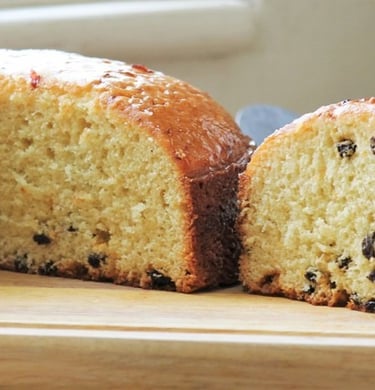
As Judith spoke, she mixed the flour with oil, honey, and spices, forming a dough with movements that seemed almost sacred. Maya watched as the old woman shaped small, round loaves, each one pressed with the imprint of a crude wooden seal bearing an olive branch.
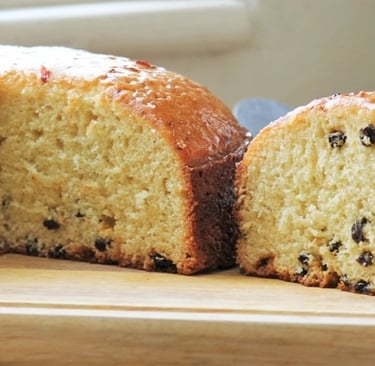
"These are called 'Widow's Cakes,” Judith explained, sliding them into her clay oven. "I bake them every week, not because I'm wealthy, but because I remember. I remember that when we give from our poverty, God multiplies our offering beyond measure."
The aroma that filled the small home was divine-warm honey, aromatic cardamom, a hint of orange blossom. But it was more than the scent that moved Maya. It was the story baked into every grain of flour, the faith kneaded into every fold of dough.
When the cakes emerged, golden and tender, Judith placed one before Maya. "Eat, child. But before you do, let me tell you why I still bake these after all these years."
She settled into her chair, her eyes distant with memory. "When I was a young woman, I lost everything- my husband, my home, my hope. I wandered like you, searching for meaning in a world that seemed determined to break me. I came to Zarephath with nothing but despair."
"An old baker, named Zulekha found me collapsed by the well. She brought me here, to this very house, and fed me these same cakes. She told me the story of the widow of Zarephath, and then she shared something else words from a prophet yet to come, words about another kind of bread."
Judith's voice grew reverent as she recited: "I am the bread of life. Whoever comes to me will never go hungry, and whoever believes in me will never be thirsty." (John 6:35)
"Zulekha told me that the widow's story wasn't just about physical provision," Judith continued. "It was a prophecy, a shadow of something greater. Just as that ancient widow gave from her poverty and received abundance, so too would the Master give from His very life so that all who hunger-for meaning, for connection, for love-might be satisfied."
Tears formed in Maya's eyes as understanding dawned. "Food is never just food," she whispered.
"No, child. Every meal is a covenant. Every shared table is an altar. When the widow baked that bread for Elijah, she wasn't just feeding a prophet-she was participating in something eternal. She was saying, 'I trust that there is enough. I trust that giving is the path to receiving. I trust that I am part of a story much larger than my own survival.'"
Judith broke her own cake, the crumb tender and sweet. "And when the Master broke bread and said, 'This is my body, given for you,' He was completing what began in that widow's kitchen. He was showing us that love makes itself bread. That sacrifice becomes sustenance. That in giving ourselves away, we find ourselves multiplied-like flour that never runs out, like oil that never runs dry."
Maya took a bite of the Widow's Cake. The sweetness of honey mingled with the richness of oil, the warmth of spices dancing on her tongue. But more than taste, she experienced something transcendent, a connection across time to that ancient widow, to Elijah, to Judith, to every soul who had ever offered their poverty and received abundance in return.
"I've travelled to twenty-seven countries," Maya said softly. "I've eaten at tables in nearly seventeen countries. I've tasted foods prepared by hands of every colour and creed. And now I understand why I was searching. I was looking for this, the realization that every meal shared in faith is communion. Every table is a bridge between heaven and earth, between one heart and another."
Judith nodded. "The widow of Zarephath teaches us to give even when we have nothing. The Master teaches us that He is the provision we've been seeking all along. And this humble cake?" She held one up, its surface still warm. "It teaches us that when we bring our small offerings to Him-our time, our talents, our very lives-He transforms them into something that feeds multitudes."
As the evening deepened, Judith taught Maya how to make the Widow's Cakes. Together they mixed flour and oil, their hands working in rhythm, their conversation flowing between sacred scripture and simple laughter. Maya learned that Judith baked extra cakes each week and distributed them to travellers and the poor, each one accompanied by the story of the widow and the promise of the Bread of Life.
"This is how faith survives," Judith explained as they worked. "Not in grand cathedrals or eloquent sermons alone, but in kitchens where stories are told and bread is broken. In small acts of radical trust that say, 'I will give what little I have, believing it is enough.'"
Before Maya left the next morning, Judith wrapped a dozen Widow's Cakes in cloth and placed them in her traveling bag. "Share these on your journey," she said. "And when you do, tell the story. Remind people that the God who multiplied flour and oil for a widow, who fed five thousand with five loaves, who became bread for a hungry world-this same God sees their poverty and offers abundance."
"Tell them that food is never just food. It is memory made tangible. It is love in given form. It is the physical proof that we are never alone, never forgotten, never beyond the reach of divine provision."
Maya embraced the old woman, understanding now that her months of wandering had led her precisely where she needed to be. As she walked the dusty road away from Zarephath, she thought about all the meals ahead of her, in distant villages, at humble tables, among strangers who would become friends.
Each meal would be an opportunity to remember. To give. To trust. To testify that there is a Master who sees our empty jars and exhausted hearts, and who promises, "Come to me, all who are weary, and I will give you rest. I am the bread of life."
In her bag, the Widow's Cakes rested, still warm, their sweet aroma a fragrant prayer rising with each step she took.
The Teaching:
The widow of Zarephath and Christ as the Bread of Life reveal the same truth: true provision flows not from our abundance but from our trust. When we offer what little we have-whether it's a handful of flour or our broken, insufficient selves, God multiplies it beyond measure. Food becomes sacred when shared in faith, transforming from mere sustenance into communion, from transaction into covenant.
Every meal we share is an opportunity to practice the widow's radical trust and to remember Christ's ultimate offering. We are called not to hoard our resources in fear, but to give generously, trusting that the One who fed multitudes in the wilderness and who offers Himself as eternal bread will never let our jars run empty. In this way, food transcends its physical purpose, it becomes the visible sign of an invisible grace, connecting our hearts to the Master and to each other in bonds that span continents and centuries.