Afghan Bolani: A Journey Through Gandana-Stuffed Tradition
The Sacred Flatbread of Afghan Hospitality
Wandering Armenian
2/16/20264 min read
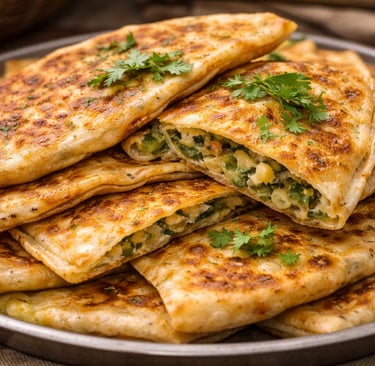
Afghan Bolani: A Journey Through Gandana-Stuffed Tradition
In the bustling streets of Kabul, the gentle valleys of Balkh, and the historic city of Herat, one finds a culinary treasure that has survived empires, migrations, and millennia-the Afghan Bolani. More than just a stuffed flatbread, Bolani represents the essence of Afghan hospitality, a symbol of generosity passed from grandmother to granddaughter across over 2,000 years of living tradition.
The Ancient Roots of Gandana Bolani
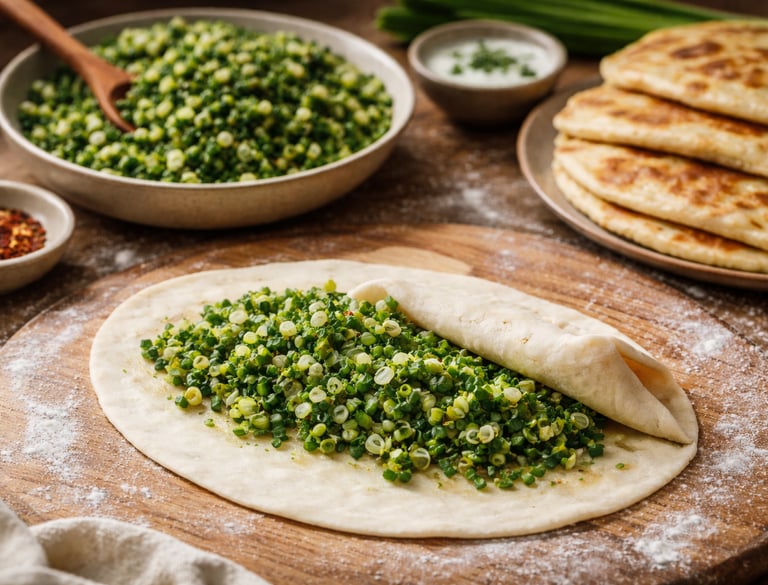
The authentic Bolani, the one that carries the soul of Afghanistan is stuffed with Gandana, the Afghan leek or garlic chives that grow wild across Central Asian meadows. This humble herb, with its distinctive fragrance and delicate flavor, has been the heart of Bolani for centuries, connecting modern kitchens to ancient hearths.
Historical records suggest that variations of this stuffed flatbread have existed in the region since before the Silk Road brought traders through Afghanistan's mountain passes. The dish evolved as nomadic peoples settled, adapting local ingredients-gandana, potatoes, pumpkin, red lentils into the pliable dough that could be cooked on simple griddles over open fires.
When waves of Afghan families dispersed across the globe due to war and upheaval, they carried their grandmother's recipes in their hearts. In new lands where gandana didn't grow, they improvised with chives, scallions, and local leeks, ensuring the spirit of the dish survived even when the exact ingredient could not be found.
A Canvas for Regional Flavors
While gandana remains the traditional heart, Bolani's versatility has made it beloved across Afghanistan's diverse regions. In this recipe, we honor the equally popular potato filling spiced with cilantro, green chilies, coriander, and turmeric. Other cherished variations include:
• Sweet pumpkin Bolani, often served during celebrations, with a hint of sugar and warming spices [ I ate this but the baked version at bustling kiosk outside the Ministry of Information & Culture back in the day in Kabul, when I could walk up safely and share a joke in my broken Urdu].
• Red lentil Bolani, protein-rich and earthy, favored in mountainous regions
• Mixed herb Bolani, combining cilantro, mint, and spring onions for a fresh, vibrant taste
Bolani's Enduring Cultural Legacy
Throughout Afghan history, Bolani has transcended mere sustenance. I personally believe that it became the food of connection served to guests as a gesture of warmth, shared at weddings and gatherings, and offered during Ramadan's iftar meals. Today, whether in Kabul's street stalls or diaspora kitchens worldwide, Bolani remains a living link to home, embodying resilience and continuity.
The Recipe: Potato Bolani with Traditional Soul
For the Dough
• 1 cup (240ml) lukewarm water
• 1½ tablespoons (23ml) vegetable oil
• 1½ teaspoons (9g) salt
• ½ teaspoon instant yeast
• 3 cups + 1 tablespoon (415g) bread flour (or all-purpose flour)
For the Filling
• 2 large potatoes, peeled and cut into 1 cm cubes
• 6 stalks green onion, finely sliced
• 1 cup (16g) fresh cilantro, chopped
• 1 fresh green chili, minced
• 1 teaspoon (1.9g) ground coriander
• 1 teaspoon (6g) salt
• ½ teaspoon ground turmeric
• ½ teaspoon ground black pepper
• 2½ tablespoons (38ml) vegetable oil, for frying
Method
1. Prepare the Dough: In a large bowl, combine the lukewarm water, oil, salt, and yeast. Stir gently to dissolve. Add the flour and mix until a shaggy dough forms. Knead for 5-7 minutes until the dough becomes soft, smooth, and elastic. If sticky, add flour one tablespoon at a time. Cover with a damp cloth and let rest for 30 minutes at room temperature.
2. Cook the Potatoes: While the dough rests, bring a large pot of water to boil. Add the cubed potatoes and cook for 12-15 minutes until tender when pierced with a fork. Drain thoroughly and transfer to a large bowl.
3. Make the Filling: To the warm potatoes, add the sliced green onions, chopped cilantro, minced green chili, ground coriander, salt, turmeric, and black pepper. Using a fork or potato masher, mash everything together until well combined. A few small lumps are perfectly fine and add texture.
4. Divide the Dough: Once rested, divide the dough into 8 equal pieces. Roll each piece between your palms to form a smooth ball. Lightly dust each ball with flour to prevent sticking.
5. Roll and Fill: On a well-floured surface, use a rolling pin to roll each ball into a thin circle, approximately 20-22 cm (8-9 inches) in diameter. The dough should be as thin as a tortilla but not so thin that it tears. Place ⅓ cup of the potato filling on one half of the circle, leaving a 1 cm border along the edge. Dip your fingers in water and moisten the border on the filled half.
6. Seal the Bolani: Fold the unfilled half over the filling to create a half-moon shape. Gently press out any air bubbles, then firmly pinch the edges together to seal. Ensure the seal is complete to prevent filling from escaping during cooking.
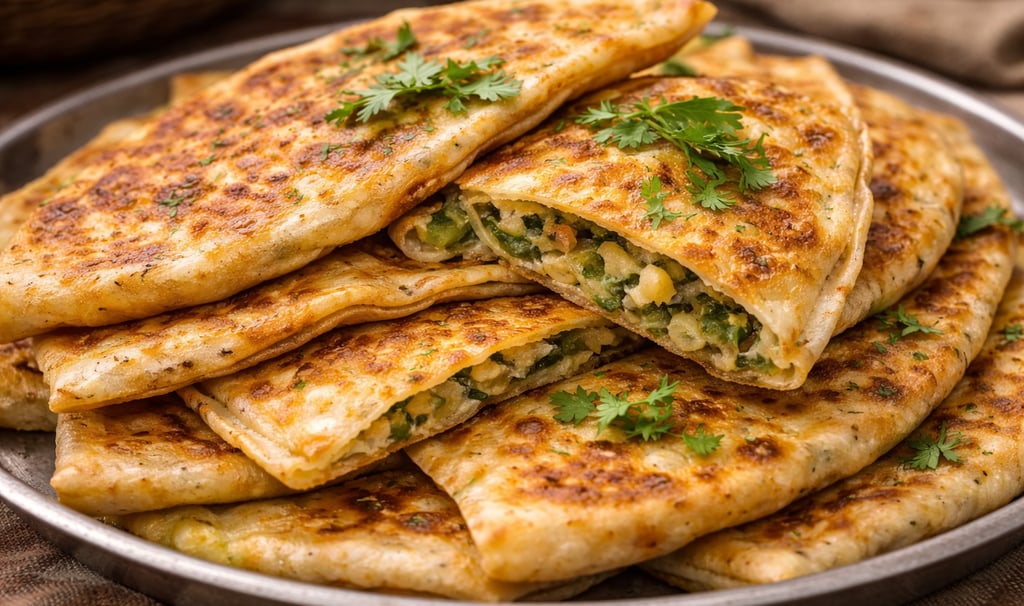
7. Cook the Bolani: Heat a large skillet or griddle over medium-high heat. Add a small amount of oil. When the oil shimmers, carefully place a Bolani in the pan. Cook for 2-3 minutes until the bottom is golden brown with darker spots. While cooking, brush the top surface with a light coating of oil using a pastry brush. Flip and cook the second side until equally golden, another 2-3 minutes. Transfer to a cooling rack or plate. Repeat with remaining Bolani.
8. Serve: Cut each Bolani into triangular wedges. Serve warm with traditional Afghan green chutney (made from cilantro, mint, jalapeño, garlic, and lemon juice), or enjoy with yogurt. Perfect alongside tea or as part of an iftar spread during Ramadan.
The Wayfarer's Reflection: Bolani as Sacred Communion
As I knead this dough and fold these half-moons, I recognize something profound: the making of Bolani in Afghan homes was never merely cooking but it was a spiritual devotion. A mother's hands, her grandmothers before her, shaping each piece with intention, offering nourishment as an act of love. In every golden crescent lies a prayer.
During Ramadan, when families break their fast together, Bolani becomes a vessel of travel communion, the sacred practice of finding God in different cultures through shared meals. This is the essence of spiritual hospitality that transcends borders and beliefs.
The scripture that comes to my mind and that resonates most deeply with this tradition is found in Hebrews 13:2: "Do not forget to show hospitality to strangers, for by so doing some people have shown hospitality to angels without knowing it." Each Bolani served to a guest, each meal shared during the breaking of the fast, becomes a moment of divine encounter, where the ordinary becomes extraordinary, where flour and water transform into communion.
Adios Amigo
Bona Apatite …till we bake again
The Wayfarer-Wandering Armenian
Feb 2026